About
Aikido Byōdōkai
While Aikido Byōdōkai teaches technically precise and effective pins, throws and joint locks, it is best understood as a form of Budo. Budo 武道 is a way or path of self-development through the study of a martial art techniques, philosophy and practices of respectful conduct. Aikido is a unique form of budo in which there is no winner or loser. One student’s success does not depend on another’s defeat – two people work together to carry-out and receive correct techniques.
Instruction in the Aikido Byōdōkai Community
The Aikido Byōdōkai Community provides each local dojo with yearly test technique curricula for youth, adults, beginners and advanced students. ABC offers clinics and special classes throughout the year so that students from local dojos can train with one another and under multiple senior instructors. ABC also provides instructor training to ensure that high level techniques and safe teaching methods are utilized throughout our dojos.
The Roots of Aikido Byōdōkai
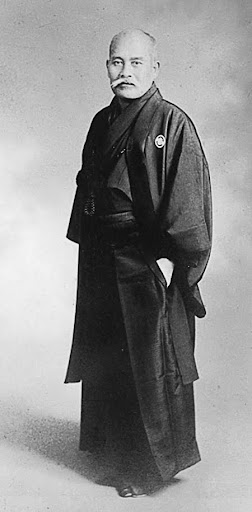
Morihei Ueshiba Sensei
Aikido was originated by Morihei Ueshiba Sensei (frequently referred to as O-sensei) in the first half of the 20th Century. Ueshiba Sensei combined the highly effective techniques of Daito-ryu Aiki-jujitsu with the samurai-descended art of the sword and the harmonious ideals of Omoto-kyo, a sect of Shintoism. Through Aikido, techniques created to harm an opponent in combat were transformed into powerful but peaceful techniques that neutralize attacks and offer a profound study of self-development, self-discipline, and interconnection.
(Photo: Ueshiba Sensei 1938)
Gozo Shioda Sensei
One of O-sensei’s early students, before WWII, was Gozo Shioda Sensei. After the war, Shioda-sensei founded Yoshinkai-style Aikido. As a “pre-war” style of Aikido, Yoshinkai-style Aikido focused on physics, physiology, and teaching basic technical skills.
(Photo: Ueshiba Sensei and Shioda Sensei, 1940)
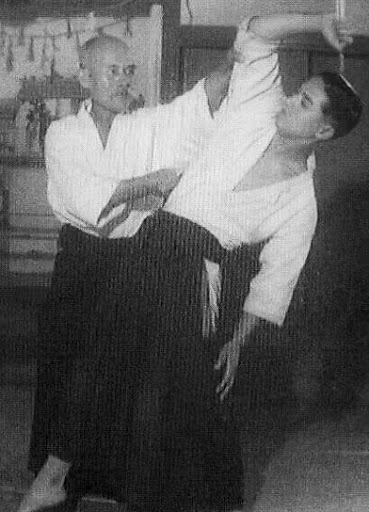
Takashi Kushida Sensei
Takashi Kushida Sensei began studying with Shioda Sensei in the early 1950s. Kushida Sensei spent 10 years as an uchi deshi, a full-time student who trained intensively and lived in the dojo. Kushida Sensei became a high-ranking instructor, teaching aikido to the Japanese Air Force, the Tokyo Riot Control Police, and National Railway Police. In 1973 he was invited to bring Aikido to the United States and began teaching in Detroit, Michigan. In 1991, he founded Yoshokai Aikido with its Headquarters in Ann Arbor, Michigan. Kushida Sensei developed Yoshokai Aikido with further emphasis on basic movements, technically precise technique, and a focus on the relationship between the person doing the technique (shite) and the person receiving the technique (uke).
Aikido Byōdōkai Instructors
All of the instructors of the Aikido Byōdōkaii Community trained under Takashi Kushida Sensei before his passing in 2012. Aikido Byōdōkai continues the deep study of aikido as a path for self-development and peaceful interactions established by Ueshiba Sensei. We focus on technically precise aikido emphasized by Shioda Sensei. We are committed to the deep study of foundational basic movements and the relationship between shite and uke, as Kushida Sensei taught. Now as an independent aikido organization, we support one another in our continued growth as aikido students and instructors. While ABC is a 501c3 governed by a Board of Directors, instructional authority rests in the ABC Shidobu Council. This group of senior level instructors oversees kyu level testing standards, conducts dan testing, directs instructor training and organizational-wide clinics and classes.
The Enso
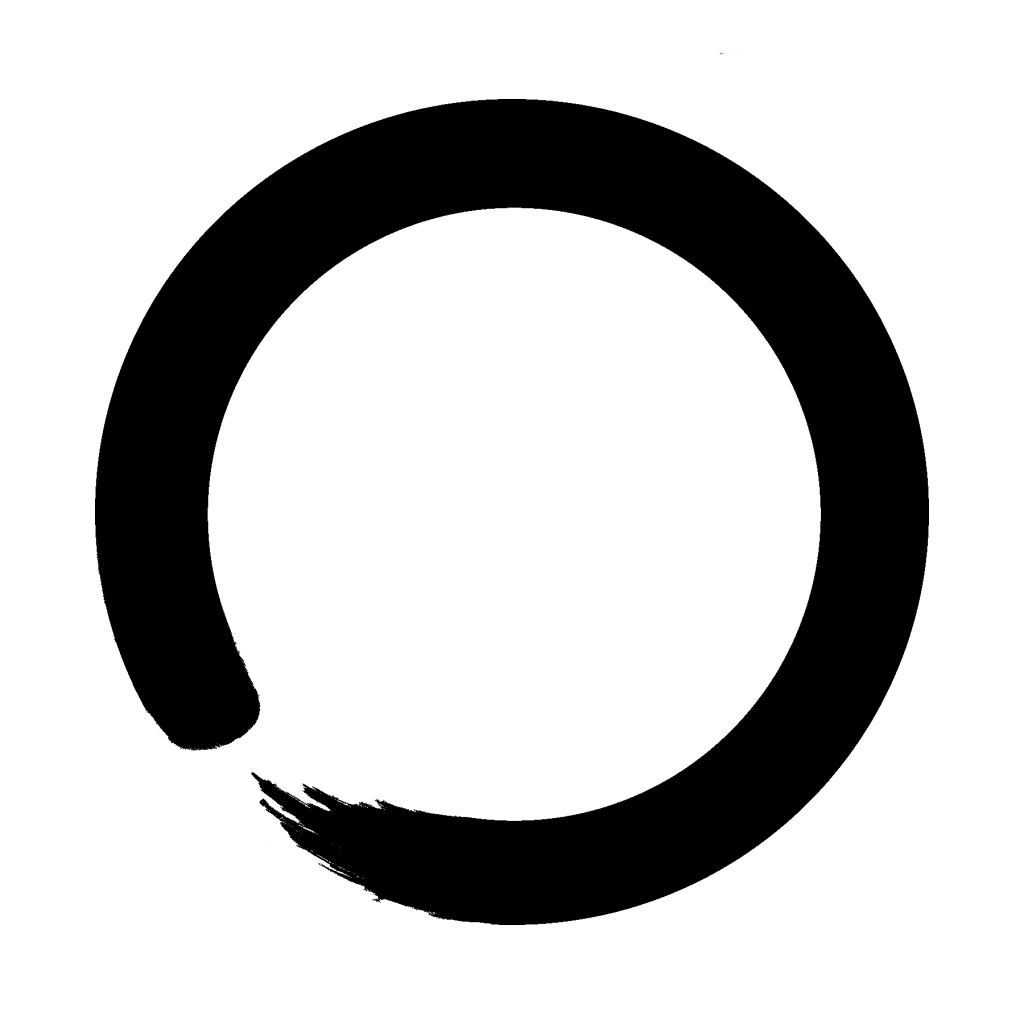
The circular image that appears on our logo and our patches is an Enso. A circle drawn in one stroke. It is said that the spirit of the artist can be seen in their Enso.
There are two types of Enso. One is a complete circle, as perfect as possible, with no beginning and no end. In some ways, it can be seen as perfection: a circle delineating the space inside from the space outside.
The other, the one used by ABC, does not fully connect. It still illustrates the ideas of inside/outside, Shite/Uke, Right/Left, etc., but there is an activeness in how the circle does not connect. Not only can the outside get in and the inside get out, but the circle almost seems to be chasing itself, mirroring many of the active, circular movements of Aikido, as well, perhaps, as echoing Uke’s frequent experience of almost connecting with Shite before being guided around.
However one views it, or draws it, the Enso takes extreme focus and skill to draw well. This, too, is a reflection of our Aikido training, as only repeated, well-guided training leads to continued growth. At higher levels, the relationship between Shite and Uke can even begin to blur, with one slipping out as the other rushes in, again mirroring our Enso design.
As with the calligrapher, allow the symbol of the Enso to spur you on to deeper focus, stronger connection, and better understanding of yourself as you continue your Aikido study.